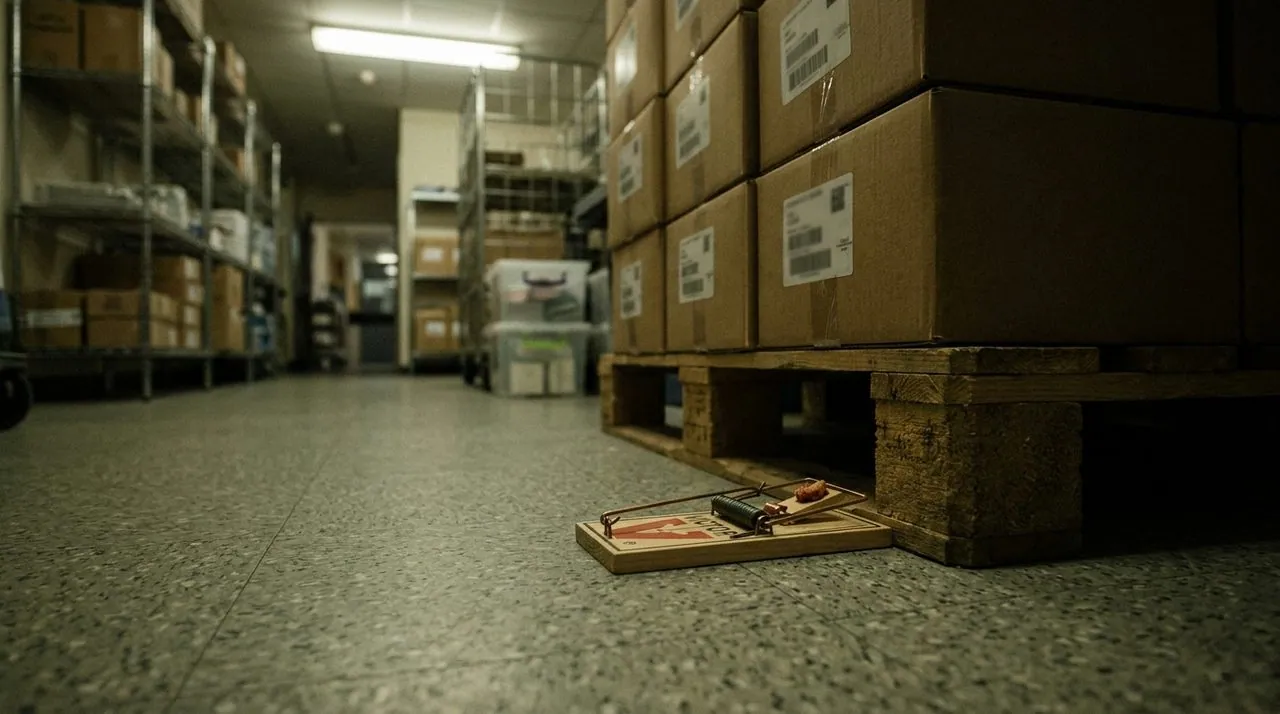
HALIFAX — A patient's family member watched mice scurry through the emergency department at Halifax's QEII Health Sciences Centre for nearly six hours last weekend, and then saw one try to climb onto the hospital bed. Nova Scotia Health acknowledges a severe rodent problem at the QEII complex and Dartmouth General Hospital, where pest control costs have skyrocketed over the last five years. Documents show the QEII's pest control budget jumped from $35,942 to $323,075, an increase of 798 percent. At Dartmouth General, costs rose from $9,545 to $120,012, a 1,157 percent increase.
"One of them said there are as many mice as there are patients here, if not more," said Jordan Bonaparte, who was with his family member at the Halifax Infirmary emergency room. "My time in the Infirmary's emergency room definitely made that clear." Bonaparte said after his family member was moved to a room, a mouse emerged and started climbing on the bed. "I'm pretty sure if I didn't get up and stomp my feet, that thing was going right up on my bed to get up where the food was that they were serving her," he said. Chris Smith, the senior director for facilities operations at Nova Scotia Health, said the volume of rodent sightings has increased exponentially in recent years. "It's easy to say that we live in a port city and it's a thing, but it doesn't change our opinion and approaches that they don't belong in health-care settings and we've got to do whatever we can to keep them out and keep those environments clean, sanitary and safe," Smith said. He attributed the surge to extensive construction projects surrounding both hospital sites, which stir up pests.
"We did expect an increase, but I don't think we expected quite the increase that we're seeing," Smith said. The health authority reported catching 1,435 mice or other rodents in the QEII buildings over the last five years. The Dartmouth General Hospital caught 321 rodents in the same period. Smith said the hospitals are complex, aging environments with thousands of people moving through daily, which complicates pest control.
The health authority has a three-pronged approach to tackle the infestation, including daily visits from professional exterminators, staff reporting of sightings to target traps, and external inspections of buildings for entry points. "Some of that effort resulted in 100 or 200 work orders for all of these little cracks and crevices that needed to be closed up," Smith explained. He said the problem is years in the making and will likely take several years to fully control. "If there's any that are still open, we're actively working on them. It's not an overnight fix." Bonaparte posted a video of his experience to his podcast pages and said some responses called the situation normal. "If your bar for health care is set so low that you're accepting there to be mice running around the emergency room where people are clinging to life, I think that's an unreasonably low expectation to have," he said. Smith is asking staff and patients to report all sightings as the health authority continues its efforts to control the infestation.