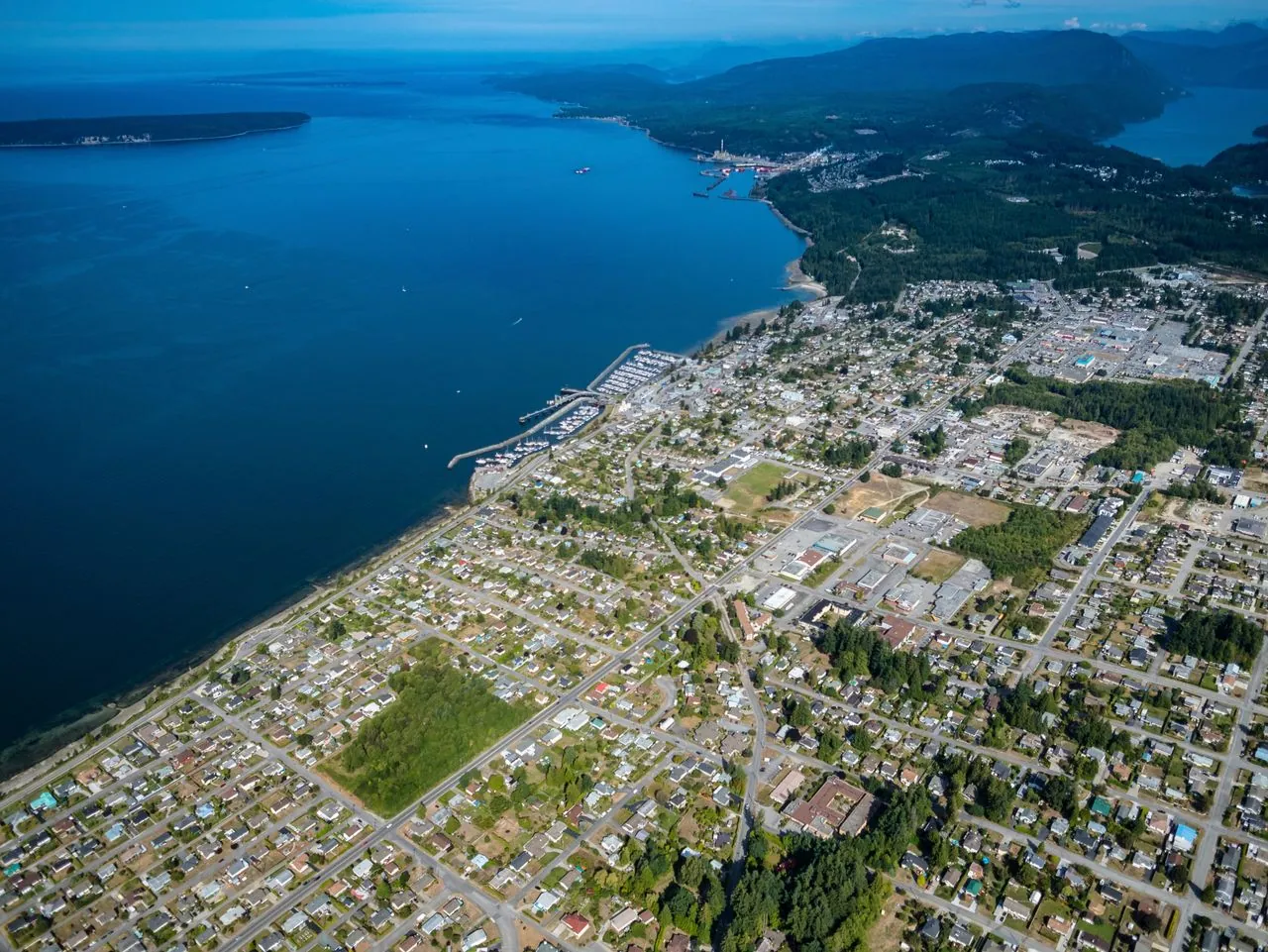
POWELL RIVER — The Canada Energy Regulator concluded an unprecedented hearing Friday into a power producer's application to export electricity from British Columbia to the United States for three decades. Powell River Energy Inc., a Brookfield Renewable Partners subsidiary, seeks a licence to send power from its two dams, which once supplied a local mill that closed in 2021. The regulator received more than 2,500 written submissions opposing the application. Intervenors including the City of Powell River argued the energy should benefit the local community.
Local Conservative MP Aaron Gunn expressed disbelief that the licence was under consideration. "This is especially egregious because this is happening at a time when the United States has implemented targeted and malicious tariffs to purposely cripple our critical industries," Gunn said. The Tla'amin First Nation and the Cranberry Business Group, which now control the former mill site, stated they need the power to attract industrial tenants and restore lost jobs. PREI argued the 30-year export contract is necessary to finance facility upgrades that generate roughly $10 million in regional tax revenue.
PREI lawyer Scott Birse told the hearing the company fulfilled its obligation to provide fair market access. He said B.C. Hydro was the sole domestic buyer interested, but negotiations over two years failed to yield a competitive offer. "B.C. Hydro did not offer a price and terms and conditions that were competitive," Birse said. The details of PREI's subsequent deal with an unnamed U.S. company remain confidential. Birse noted the regulator's rules require good faith negotiation, not a right of first refusal for domestic buyers.
B.C. Hydro contested PREI's account in its final submission. Lawyer Michelle Casey said the record showed misleading and inconsistent admissions from the power producer. "There's a pattern of behaviour of evasiveness and a lack of transparency," Casey said. She asserted that PREI did not negotiate in good faith with the Crown corporation and did not extend the same offer. The hearing also considered potential impacts on the rights of the Tla'amin Nation, which reacquired part of the mill site last year.
PREI stated its ongoing relationship with the Tla'amin Nation meant the export licence would cause no adverse effects. The company said it was unaware of the nation's specific power needs for the site, as plans are unconfirmed. "Planning for a potential load is difficult in the abstract," the company's lawyer said. "The power generated by the facilities needs a home now." PREI added that B.C. Hydro could still supply power to the site if needed.
The Tla'amin Nation disagreed, arguing the licence would adversely affect its territory and members. "For over 100 years the nation has watched their lands and resources being exploited by third parties," said the nation's lawyer Jennifer Griffith. She said the licence would affect Aboriginal title rights and limit economic interests. Griffith also stated B.C. Hydro would require significant system upgrades to provide industrial power to the site, and that shifting operational control to a U.S. buyer could impact lands and fish habitat. Former B.C. energy minister Adrian Dix has cited a projected 50 per cent increase in provincial electricity demand by 2050, but PREI argued that future need should not factor into its application. The Canada Energy Regulator typically issues a decision on an export licence within 12 weeks of a hearing's conclusion.